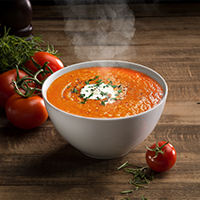
Otter’s useful guide to Tomatoes

Better than shop bought

Often, the tomatoes you buy in a supermarket are grown abroad, all year round, without any soil, using artificial fertilisers to force growth.

They are picked early, before they have ripened, which affects the flavour of the fruit.

Growing your own tomatoes means you’ll taste the fruit as nature intended.
So why not give it a go this year?
Different types

The simplest method is to buy baby tomato plants that you can transfer into pots, hanging baskets or grow bags.

There are four main types of tomato to choose from:

Salad

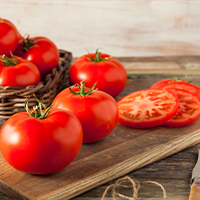
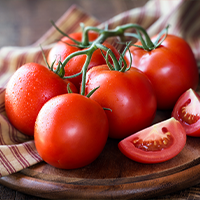
The classic tomato, round and firm, ideal for a multiple uses: in salads, on the grill, fried or oven baked.

Cherry

Cherry tomatoes have increased in popularity over the years due to their sweet flavour.
A superb addition to any salad or pasta dish.
They can also be a colourful choice, as they are available in orange, yellow and even black!

Plum

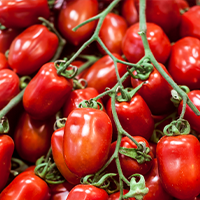
Plum tomatoes are oval shaped.
They can be as small as a cherry tomato but there are large varieties too.
They tend to be fairly sweet and are superb used in Italian-style sauces or cooked on the BBQ.
If you fancy making your own sun-dried tomatoes, plums are a good choice.

Beefsteak

The biggest type of tomato, ideal for stuffing and baking whole.
Some varieties are ribbed giving them extra texture.
Packed with flavour, they’re also good to use in sauces.

How to grow tomatoes

Pots

Benefits of growing tomatoes in pots include being able to choose where to place the pot, move it as the plant grows bigger – or bring it indoors if there’s a threat of frost.
Pots look great on the patio or placed around the garden.
If you don’t have a garden you can put them on a veranda or even indoors, by a sunny window.

Planting instructions: Choose good-sized pots, ideally 30cm minimum.
A larger size will make it easier to look after the plant and encourage growth.
Fill with compost, make a hole for the plant and place it carefully in.
Usually you would add one plant, although you can plant more in an extra-large pot!

Hanging Baskets

One of the most popular choices for hanging baskets is the Tumbler variety.
As the name suggests, the stems ‘tumble’ over the side of the hanging basket much like a trailing lobelia or petunia.
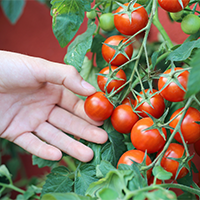
When the fruit ripens you’ll see a cascade of red tomatoes.
Hanging baskets can dry out quickly so you’ll need to water regularly.

Planting instructions: you’ll need a strong bracket as the basket will get heavy as the fruit appears.
Fill your hanging basket with compost and carefully place the tomato plant into the centre.
Depending on the size of your hanging basket you might put more than one plant in, but avoid overcrowding.

Grow Bags

Most grow bags are suitable for three tomato plants.
These are best placed by a sunny wall where you can attach stakes or canes as necessary.

Planting instructions: loosen the compost before you start – shake the grow bag and knead out any solid lumps.
Cut out as per the instructions and water well.
Make a hole for each plant and carefully place them in the grow bag.
As the plants grow bigger you are likely to need stakes to support the stems so they don’t break.

General advice

Watering

Whichever container you’re using, water regularly and don’t let the compost dry out.
This is particularly important with peat free compost as it may dry out more quickly.
Watering at dawn and dusk is often recommended, but if the compost has dried out on a very warm day, there’s no harm in adding more water.
Make sure you water the roots, not the leaves, as this might encourage blight.

However, you also need to avoid overwatering: waterlogging your containers will also encourage blight, so it’s important to get the balance right.

Pinching Out

Pinching out is a way of keeping the plant strong, putting energy into growing flowers and fruit rather than more and more stems and leaves.
As the plant grows you’ll see small shoots appear between the main stem and branches.
These are the sideshoots you need to pinch out – literally, using your finger and thumb. Do this regularly.

Not all varieties of tomato need pinching out, for example Tumblers and shrub tomatoes like Tiny Tim. You can check when you buy the plants.

Stopping

For some varieties, in particular taller cordon varieties, it is useful to ‘stop’ the plant after four or five trusses of flowers and fruit have formed, usually in late summer.
This simply means cutting or pinching off the main stem so that the plant doesn’t try to produce more fruit that won’t develop.

Feeding

Some gardeners start feeding tomato plants when the flowers appear, others when the fruit is the size of a pea.
A liquid tomato is very convenient and will include instructions on how much to use.
Feed every 14 days to start with, then weekly once the plants are really thriving.

Growing from seed

While here we are looking at growing tomatoes from baby plants, you can of course also grow tomatoes from seed. This needs a bit more work and you’ll need to start earlier. You can sow the seeds in a heated propagator or perhaps a warm indoor window sill in February. If you have an unheated greenhouse, sow them in March, once the weather warms up. 

If your first crop is from baby tomato plants, you could save the seeds and try growing from seed next year!

Things to look out for

Disease

Tomato blight is a common disease in tomato plants. The main symptoms are rotting fruit and leaves. It can be quite upsetting to see a plant you’ve cared for be struck with blight. You can try to cut off all the infected parts of the plant but usually the plant won’t recover. To avoid blight, water only the roots. You can also look for a blight-resistant variety.
Greenfly, whitefly and aphids can destroy tomato plants if left uncontrolled. Spray your plants with a chemical-free repellent as soon as you notice them or remove by hand if you prefer.

When to harvest

Generally tomatoes begin ripening in mid-summer, although this will depend on when you planted them, the weather conditions, and the variety. A ripe tomato will come away from the vine easily. If you leave them too long, the fruit will split and even rot.
If you have a bumper harvest you may find you have lots of green tomatoes in early autumn. You can pick these and let them ripen indoors – or make green tomato chutney.

Need more advice?

If you’re still unsure or need any advice, our friendly teams will be happy to chat with you and suggest which varieties would be best for you to plant, as well as when and where to plant them.

We hope you enjoy planting your tomatoes– but more importantly, enjoy eating them!

Related News

Newsletter

Sign up to receive our latest insights & news.

This is a Development or Staging site for Otter Garden Centres - Dev by Blaze Concepts!